
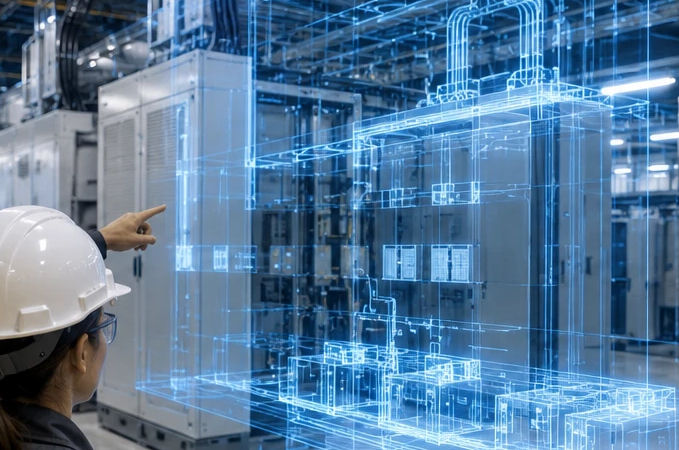
The demand for high-performance computing, AI workloads, and cloud services is skyrocketing, pushing data centers to their limits. With power constraints, sustainability concerns, and ever-changing technology requirements, IT leaders can no longer plan on designing a data center based solely on today’s needs—they must prepare for tomorrow’s growth and flexibility.
A well-designed data center is about more than keeping operations running. It’s about scalability, efficiency, and futureproofing against rising workloads, evolving cooling requirements, and energy constraints.
Here are five things to carefully consider when trying to future-proof your data center selection.
#1. Power Distribution: Balancing Density and Flexibility
Modern data centers must support a growing range of workloads, from traditional enterprise applications to AI-driven data processing. Optimized power distribution is crucial for efficiently accommodating these high-density deployments.
415V power distribution is becoming the standard for higher density workloads and offers more efficiency and lower transmission losses, especially for AI and cloud workloads. Supporting both 208V and 415V ensures flexibility for different hardware configurations, allowing a facility to meet current and future technology needs.
Power availability is already a limiting factor in many regions. Companies strategically optimizing power distribution today will be better equipped as demand rises.
#2. Data Hall Design: Customization for Client Needs
Physical infrastructure flexibility is one of the most overlooked aspects of designing a data center. Different workloads have varying environmental requirements, making customization at the data hall level essential. A one-size-fits-all approach no longer works, and providing tailored solutions ensures long-term adaptability.
A key consideration is the debate on raised floors versus concrete slabs. Some deployments benefit from raised flooring, which allows for optimized airflow and efficient cooling distribution. Others require concrete slabs for the stability needed to support heavier racks and equipment.
Both options per data hall allow companies to customize their infrastructure based on workload demands and operational preferences.
Beyond flooring, adaptability in layouts and cooling configurations is crucial for ensuring that businesses can scale without structural limitations. For air cooled environments there is hot aisle vs cold aisle containment, both are good but hot aisle is more efficient and can cool more dense environments.
AI and high-performance computing (HPC) workloads may require liquid cooling, while traditional enterprise applications may function well with air cooling. A modular, flexible data hall design enables businesses to pivot as technology evolves.
By prioritizing customization and modularity, you can maximize efficiency, scalability, and long-term growth potential and ensure your data centers remain future-ready. For example, if liquid cooling is needed you may want to consider the raised floor option, whereby the chilled water loop is run under the tiled floor not exposing the environment to any water should a leak arise like you would with overhead piping on a concrete slab floor.
#3. Preparing for Liquid Cooling Deployments
As chip densities increase, traditional air-cooling methods are becoming insufficient for handling high-performance workloads. Liquid cooling is shifting from a niche solution to a necessity, particularly for AI and machine learning applications, where higher computational power generates significant heat.
To accommodate these increasing cooling demands, a chilled water loop should be integrated into the data center’s design from the outset. This infrastructure enables efficient liquid cooling deployments, ensuring facilities can support evolving workloads without expensive and long lead time overhauls.
Another crucial factor is standardizing the demarcation point for liquid cooling installations. Whether cooling is serviced to the Coolant Distribution Unit (CDU) or extended beyond the customer footprint, a predefined implementation strategy helps ensure seamless deployment and future scalability.
Planning for liquid cooling before it becomes necessary helps avoid costly retrofits and operational disruptions. When investing in HPC or AI infrastructure, prioritize liquid cooling-ready facilities to ensure long-term efficiency and reduced costs.
#4. Electrical Design Flexibility: Tailoring Redundancy Options
Data center uptime is non-negotiable, but not every workload requires the same level of redundancy. Some applications demand maximum reliability, while others can tolerate occasional downtime in exchange for cost savings.
Designing a data center with power flexibility allows you to balance cost and resilience, so you only invest in the redundancy required for your workloads.
Key redundancy models to consider:
- 2N Redundancy: The gold standard for mission-critical workloads requiring maximum uptime. It ensures complete duplication of power infrastructure, eliminating single points of failure.
- N+1 Redundancy: A cost-effective solution providing backup capacity without complete duplication. If a single component fails, the backup ensures continued operation. This is the most common among the D C operators, as most employ a catcher system whereby 5 systems sever 4 active ones in case one fails automatically transferring the load to the spare, as an example.
- N Redundancy: This setup is suitable for less critical applications where uptime is necessary but not business critical. It provides essential power infrastructure without additional redundancy layers, keeping costs lower. Sometimes used for AI workloads in the training phase where uptime is not 100% critical.
Data centers can offer a competitive advantage while optimizing capital expenditures by allowing customers to select their preferred redundancy level per data hall. This approach will enable you to tailor your power strategy to match customers’ needs, ensuring efficient resource allocation.
#5. Planning for Alternative Power Sources and Microgrid Attachments
Power availability is one of today’s biggest challenges in designing a data center. As facilities expand, access to reliable energy sources is becoming a bottleneck. With growing demand from AI, HPC, and cloud workloads, power constraints are a rising concern.
Strategic energy planning is essential for long-term scalability and resilience.
A microgrid-ready contingency design may allow alternative power integration when traditional grid power is unavailable or maxed out. On-site energy generation and storage can provide greater energy independence and stability.
Additionally, renewable energy sources—such as solar, wind, nuclear, and natural gas—can supplement traditional power sources, when tapped as a microgrid. This can reduce reliance on fossil fuels while lowering operational costs.
Corporate sustainability mandates and ESG (Environmental, Social, and Governance) goals make renewable energy integration a competitive differentiator. By prioritizing clean energy and carbon reduction, you’ll be better positioned to comply with regulations and attract environmentally conscious clients.
Investing in power diversification today ensures long-term growth, resilience, and reduced environmental impact, positioning your company for a sustainable future.
Designing a Data Center: Investing Wisely for the Future
Data center investments are among your company’s most significant tech infrastructure decisions. Designing a data center for future scalability, flexibility, and energy efficiency is crucial for long-term success.
By prioritizing power flexibility, liquid cooling readiness, modular hall design, and alternative energy integration, IT leaders can ensure their data centers remain resilient in an era of rapid technological change.
Now is the time to evaluate your data center strategy and invest in a way that will support your business needs—not just today but for the next decade and beyond.
Contact us today to explore how Techsol Systems can transform your business ICT solutions.
Share
-
Previous Post
Unified Storage: Modern Data Management