
Businesses switch to on-premise servers to gain greater control over their data, strengthen cybersecurity, meet regulatory compliance requirements, and reduce long-term infrastructure costs. Unlike cloud-based environments, on-premise servers allow organizations to manage their own hardware, security policies, and sensitive information without relying on third-party providers. This level of control is especially valuable for businesses operating in highly regulated industries or handling confidential customer and operational data. In this guide, you’ll learn the key benefits of on-premise servers, how they compare with cloud infrastructure, and the best practices for implementing a successful on-premise strategy.
For organizations that cannot compromise on data privacy, regulatory compliance, business continuity, and operational control, on-premise infrastructure has evolved from a traditional IT model into a strategic business advantage. As concerns around data security, vendor dependency, and rising cloud subscription costs continue to grow, many enterprises are reassessing their infrastructure strategies. This article explores the business benefits of on-premise servers, compares on-premise and cloud security models, highlights real-world use cases, and outlines practical steps for a successful migration to an on-premise environment.
Why Are Businesses Moving Back to On-Premise Infrastructure?
While cloud computing continues to play an important role in modern IT environments, many organizations are recognizing that a cloud-only strategy may not meet all their operational, security, and compliance requirements. As businesses grow, they often encounter challenges related to recurring subscription costs, data governance, vendor lock-in, and limited control over infrastructure. At the same time, regulatory requirements are becoming stricter across industries such as healthcare, finance, government, and manufacturing. Organizations must maintain greater visibility into where their data is stored, who can access it, and how it is protected. On-premise infrastructure addresses these concerns by giving businesses complete ownership of their systems and data. Additionally, advancements in server technology, virtualization, automation, and cybersecurity have made modern on-premise environments more efficient, scalable, and cost-effective than many organizations realize. As a result, businesses seeking greater control, reliability, and long-term value are increasingly adopting on-premise infrastructure as part of their digital transformation strategy.The Business Reality Behind the Rise and Fall of Cloud Reliance
The agility and scalability benefits of cloud platforms are often gets accompanied by unknowns. As a business grows, it faces certain hurdles that impact it in matters such as security and business continuity.Key concerns with cloud-reliant infrastructure include:
- Limited visibility into data storage locations
- Shared responsibility models that blur accountability
- Increasing operational costs due to recurring subscriptions
- Compliance risks related to cross-border data storage
- Downtime caused by internet failures or third-party outages
What Makes On-Premise Servers a Strategic Business Asset?
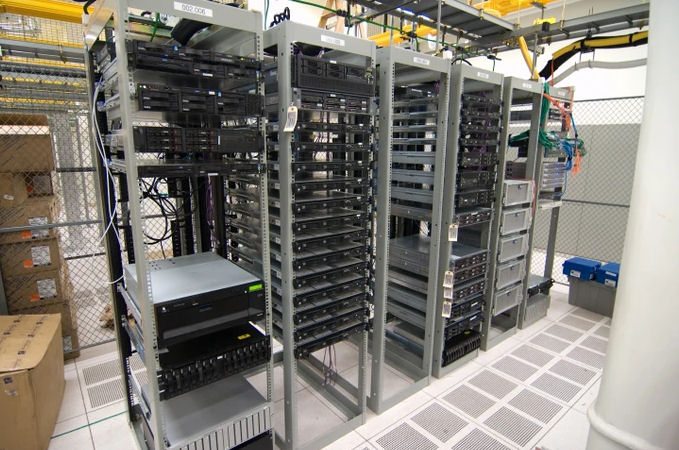
The servers used in on-premise hosting are hosted and controlled inside the organizational framework. This provides the holding enterprise with full control over data, systems, and security policies, an issue that cannot be easily addressed through the cloud model. For instance, organizations that focus on secure on-premise operations will benefit from an infrastructure that is aligned with their goals and not those of their vendors.Key On-Premise Servers Benefits That Drive Business Value
1. Absolute ownership and sovereignty over data
One of the key motivating factors for adoption in the on-premise infrastructure is, in fact, data sovereignty. By default, the structures in an on-premise environment give enterprises complete ownership of their data, right from where it resides to who it is controlled by. This becomes even more crucial for organizations that are bound by GDPR, HIPAA regulations, ISO, or data localization regulations of some nations. This is because storing data through internal infrastructure allows organizations to remain less vulnerable to such regulations. A trusted on-premise infrastructure provides a guarantee that no data will ever flow outside the trusted boundaries, especially for the management of confidential communication and sensitive files.2. AI-Driven Innovation With Full Data Control
Today, Artificial Intelligence is becoming a necessity for the operations of businesses, whether it is for predictive analytics, automations, or decision-making. The use of Artificial Intelligence also depends on the accessibility, quality, and security of data. On-premise servers enable enterprises to execute AI models on their infrastructure without allowing sensitive data to exit their environment. This is opposed to AI solutions offered on cloud infrastructure, which are not entirely owned or controlled by an enterprise. Important benefits of AI on on-premise servers include:- Complete control of training data and AI models to avoid the leakage of data.
- Handling compliance with data protection regulations when utilizing AI on sensitive data of customers/internal data
- Reduced Latency and Enhanced Processing Capabilities for Real-Time AI Services
- Tailoring AI models for a certain business need or industry requirements
- Reduction of dependence on vendors for AI tools and infrastructure
3. Enterprise-Grade Security Without Compromise
In the comparison of on-premise versus cloud security, control is the biggest differentiator. On-premise environments afford the business with the ability to design and enforce a security framework tailored precisely to their risk profile. For on-premise servers: The organizations can:- Deploy custom firewall and intrusion detection systems
- Enforce Role-Based Access Controls
- Real time network activity monitoring
- Patch and update independently outside the cycle
- Limit both physical and digital access to critical systems
4. Predictable Costs and ROI
Cloud pricing models can appear quite tempting when initially adopted. However, as the usage increases, the business can be confronted with charges regarding storage, bandwidth, enhanced security, and licensing. On-premise servers involve higher capital expenditures at first, but there are no ongoing subscription costs or scalability uncertainties. Over time, this means that:- Reduces Total Cost of Ownership
- Improved budgeting and financial planning
- Higher returns on investment in infrastructure
5. Operations Without Interruption and Business Continuity
Cloud infrastructure by definition has developed a life dependent on continuous internet connectivity and service availability. Even short outages may break communication, collaboration, and mission-critical systems. On-premise servers work in isolation from outer networks, ensuring accessibility of inside systems without any encumbrances even in the case of:- Internet Outages
- Cloud service outages
- Congestion in networks
- Vendor-side failures
6. Optimisation & Customization Performance
Because they are designed for general use, performance optimization on cloud environments is limited. This makes on-premise servers able to be fine-tuned to meet particular business needs. Organizations can optimize on-premise infrastructure for:- High-speed internal communication
- Low-latency applications
- Large file transfers
- Industry-specific software workloads
Contact us today to explore how Techsol Systems can transform your business ICT solutions.
Share