


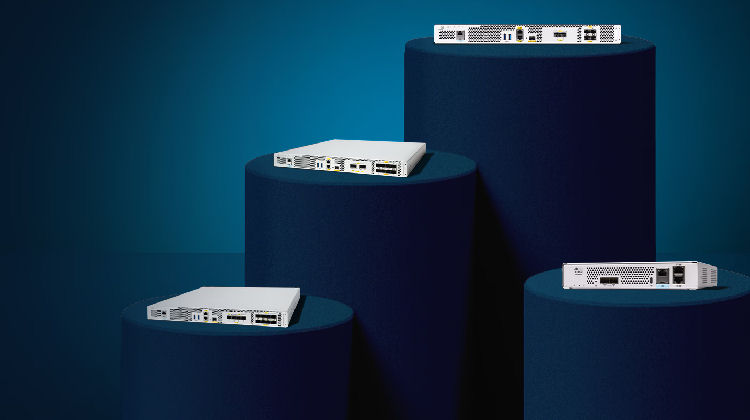
Wireless LAN Controller (WLC) A networking device that consolidates the management of APs in a network. It allows you to easily manage, customize and monitor your APs with a remote control device that you have never experienced before, all in one networking group, anywhere, anytime.
Key Functions and Benefits

Centralized Management
WLCs centralize AP management in a single location, and their use streamlines the way in which new configurations, firmware, and policies are applied. This centralized model eliminates administrative redundancy and also facilitates creating consistent policy open across the wireless network.
Load Balancing
The WLC can balance the client load by tracking the load to each AP so that no single AP gets over loaded. This has the result of achieving best performance and best user experience.
Seamless Roaming
WLCs ensure seamless roam between APs while clients traverse the wireless network. This seamless roaming feature is critical for real-time applications such as VoIP and video conferencing that require the signal even to be moving around without disruption.
Security and Policy Enforcement
WLCs dictate the security policies in place among managed APs (such as for authentication protocols, encryption methods, detection of unauthorized access, and so on). Failover APs can also sniff out and defeat rogue APs and unauthorized devices.
Performance Optimization
With features such as Radio Resource Management (RRM), WLCs adjust channel assignments and transmit power levels to help with interference and coverage.
Where does the controller function in the network layer?
WLCs mainly work in OSI Layer-2 and Layer-3. They maintain MAC addresses, VLANs and IP routing for wireless clients. WLCs also manage control plane operation such as AP configuration and client association.

WLC to Have or Not to Have?
The need for a WLC however would depend upon the size and scale of your wireless:
Small Scale: For small environments (hundreds of APs) with dual-AP (or less) per site, standalone or cloud-managed APs can be good enough.
Medium to Large Networks: Large or medium organizations with multiple APs appreciate the central control and scale of WLCs.
Secure Industries: For highly-secure environments (e.g., healthcare, finance), WLCs are commonly used for enforcement of consistent security policies.